May 11, 2026
By Dr. Asif Pirani
Choosing the right implant size is only one part of planning a breast augmentation. The final result also depends on where the implant is placed, how the pocket is created, the patient’s natural breast tissue, and the quality of the skin envelope.
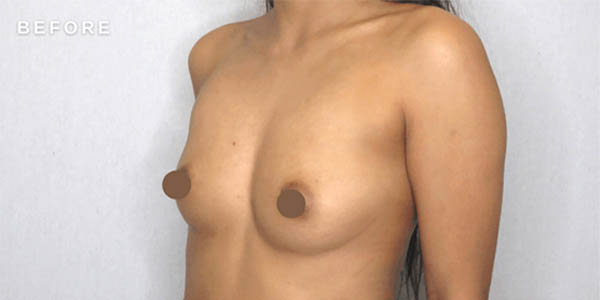
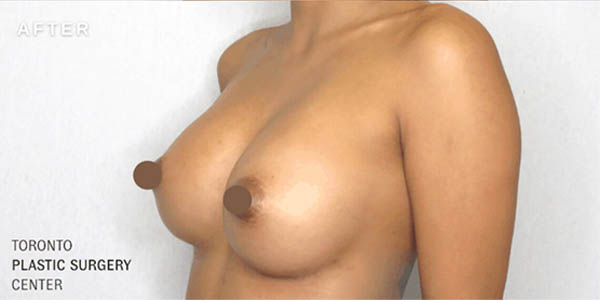
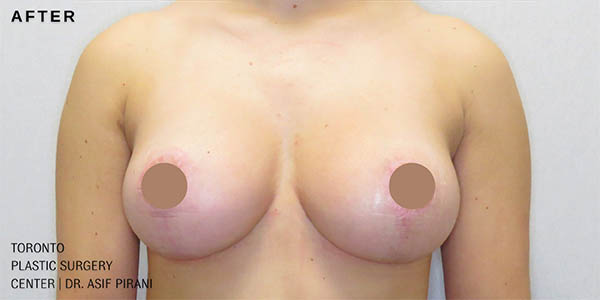
At The Toronto Plastic Surgery Center, Dr. Asif Pirani commonly uses a dual-plane breast augmentation technique for patients seeking a refined, natural-looking result. This approach allows the upper portion of the implant to sit beneath the pectoralis muscle while the lower portion of the implant can expand beneath the breast tissue. In the right patient, this can help create a smooth upper pole transition, improved lower pole shape, and a natural teardrop-type contour.
It is important to separate two concepts that are often confused: implant placement and incision location. Dual-plane refers to where the implant sits. Inframammary, periareolar, and transaxillary refer to where the incision is made. This article focuses on dual-plane implant placement and why Dr. Pirani often recommends it for breast augmentation patients in Toronto.
What Is Dual-Plane Breast Augmentation?
Dual-plane breast augmentation is a technique where the implant is placed partially under the pectoralis major muscle and partially under the breast tissue.
The upper portion of the implant benefits from muscle coverage, which can help create a softer and more natural transition in the upper breast. The lower portion of the implant is not fully restricted by the muscle, allowing the lower breast to round out and develop a more natural shape.
This is one of the reasons dual-plane breast augmentation can be especially helpful for patients who want increased volume while still maintaining a refined, proportionate, and natural-looking result.
Why Dr. Pirani Often Recommends the Dual-Plane Technique
Dr. Pirani often recommends dual-plane breast augmentation because it offers a thoughtful balance between coverage, shape, and control.
For many patients, placing the implant entirely above the muscle may make the implant more visible or palpable, particularly in those with thinner breast tissue. On the other hand, placing the implant fully under the muscle can sometimes limit lower pole expansion and may contribute to animation changes when the chest muscle contracts. It can also lead to waterfall deformities long term.
The dual-plane approach is designed to combine the benefits of both positions. It provides upper pole coverage where it is often most useful, while allowing the lower portion of the breast to expand and shape around the implant more naturally.
For appropriate patients, this can help achieve:
- A smoother upper breast transition
- Improved lower pole fullness
- A more natural teardrop-type shape
- Reduced visibility of implant edges in thinner patients
- A customized result based on anatomy and goals
- Potentially lower capsular contracture risk compared with purely above-the-muscle placement
The exact technique is tailored to each patient’s chest wall, breast tissue, implant size, implant profile, and desired outcome.
Dual-Plane vs. Other Implant Placement Options
When discussing breast augmentation, it is more accurate to compare dual-plane placement with other implant pocket options, such as subglandular, subfascial, and full submuscular placement.
Dual-Plane Placement
With dual-plane placement, the implant is partially under the pectoralis muscle and partially under the breast tissue. This approach can provide upper pole coverage while allowing the lower breast to expand and develop a softer, more natural contour.
Dual-plane placement also shares some of the capsular contracture risk-reduction advantages associated with muscle coverage. Published studies have identified subglandular implant placement as a risk factor for capsular contracture, while submuscular or subpectoral placement has generally been associated with lower rates in many analyses.
For many patients seeking breast augmentation in Toronto, this is Dr. Pirani’s preferred approach because it allows him to balance volume, shape, tissue coverage, and long-term implant behaviour in a predictable way.
Subglandular Placement
Subglandular placement means the implant sits above the pectoralis muscle and beneath the breast gland.
This approach may be appropriate for select patients with enough natural breast tissue to cover the implant. However, in thinner patients, subglandular placement may increase the risk of visible implant edges, rippling, or a more rounded upper pole appearance.
Subglandular placement may also be associated with a higher risk of capsular contracture compared with implants placed partially or fully beneath the muscle. This does not mean subglandular placement is never appropriate, but it is one of the factors Dr. Pirani considers when recommending the safest and most predictable implant pocket for each patient.
For patients seeking a very natural breast augmentation result, especially those with less soft tissue coverage, Dr. Pirani may recommend a dual-plane approach instead.
Full Submuscular Placement
Full submuscular placement places the implant more completely beneath the chest muscle.
This can provide additional implant coverage and has historically been associated with lower capsular contracture rates than subglandular placement. However, it may also limit how naturally the lower breast expands. In some patients, full submuscular placement may contribute to animation changes when the pectoralis muscle contracts. Waterfall deformities are another potential long term complication of full submuscular placement.
Dual-plane breast augmentation allows Dr. Pirani to preserve many of the benefits of muscle coverage while still creating a more natural lower pole shape.
Subfascial Placement
Subfascial placement positions the implant beneath the fascia overlying the pectoralis muscle, but not beneath the muscle itself.
This technique can be useful in select patients and has received renewed attention in aesthetic breast surgery. Some studies have reported low capsular contracture rates with subfascial placement, although the long-term evidence is less extensive and patient selection remains important.
Subfascial placement generally does not provide the same degree of tissue coverage as a dual-plane technique. The best option depends on the patient’s anatomy, tissue thickness, implant choice, and desired aesthetic result.
How Implant Placement May Affect Capsular Contracture Risk
Capsular contracture is one of the most important long-term risks to discuss when planning breast augmentation. It occurs when the normal scar tissue capsule that forms around a breast implant becomes firmer, tighter, or more distorted than expected. In more significant cases, capsular contracture can cause firmness, discomfort/pain, implant malposition, or visible changes in breast shape.
Implant placement may influence this risk. In general, studies have shown that implants placed above the muscle, often called subglandular or prepectoral placement, may have a higher risk of capsular contracture compared with implants placed partially or fully beneath the pectoralis muscle.
This is one reason Dr. Pirani often prefers a dual-plane approach for breast augmentation. Dual-plane placement provides upper pole muscle coverage while still allowing the lower portion of the implant to shape the breast more naturally. For many patients, this offers a thoughtful balance between reducing visible implant edges, supporting a natural shape, and potentially lowering the risk of capsular contracture compared with purely above-the-muscle placement.
That said, capsular contracture risk is not determined by implant placement alone. Other important factors include meticulous surgical technique, implant handling, control of bleeding, infection prevention, patient anatomy, smoking status, implant characteristics, and the body’s individual healing response.
At The Toronto Plastic Surgery Center, Dr. Pirani uses careful pocket creation, precise hemostasis, and modern implant-handling principles to help minimize avoidable risks wherever possible.
How Dual-Plane Placement Helps Create a Natural Shape
A natural-looking breast augmentation is not only about size. Shape, proportion, implant position, and tissue behaviour all matter.
One of the main advantages of dual-plane breast augmentation is that it allows the lower portion of the breast to round out while maintaining a smoother transition in the upper breast. This can help create a teardrop-type contour, where the breast has a gentle slope in the upper pole and more fullness in the lower pole.
This type of result is especially appealing to patients who want a noticeable improvement in volume without an overly artificial or top-heavy appearance.
Dr. Pirani evaluates each patient’s natural anatomy carefully, including:
- Chest wall shape
- Breast width
- Nipple position
- Skin elasticity
- Amount of natural breast tissue
- Degree of lower pole tightness
- Desired implant size and projection
These details help determine whether dual-plane placement is the right technique and how the implant pocket should be created.
Who Is a Good Candidate for Dual-Plane Breast Augmentation?
Dual-plane breast augmentation may be a good option for many patients considering breast implants in Toronto, particularly those who want a natural-looking increase in breast volume.
This technique may be especially helpful for patients who:
- Have thin or moderate breast tissue coverage
- Want a smooth upper pole transition
- Want improved lower pole shape and fullness
- Prefer a natural teardrop-type breast contour
- Are concerned about visible implant edges or rippling
- Want a result that is customized to their body rather than a one-size-fits-all approach
- Have mild lower pole tightness that may benefit from controlled release
- Wish to reduce avoidable risks where appropriate, including the risk of visible implant edges and potentially capsular contracture compared with subglandular placement
In some patients with significant breast sagging, a breast lift may also be needed. Dual-plane breast augmentation can sometimes improve shape, but it does not replace a mastopexy when nipple position or excess skin requires surgical lifting.
During consultation, Dr. Pirani will assess whether breast augmentation alone is appropriate or whether a breast lift, fat grafting, or another approach may be recommended.
What About the Incision?
The incision is a separate decision from implant placement.
Dual-plane refers to where the implant sits. The incision refers to how the surgeon accesses the pocket.
Common breast augmentation incision options include:
- Inframammary fold incision, placed near the crease beneath the breast
- Periareolar incision, placed around the border of the areola
- Transaxillary incision, placed in the armpit
Dr. Pirani commonly uses the inframammary fold incision for breast augmentation because it allows excellent visibility, precise pocket creation, controlled hemostasis, and accurate implant placement. This approach also allows the incision to be hidden near the natural fold beneath the breast in most patients.
A transaxillary incision, by contrast, refers to an armpit incision. It should not be compared directly with dual-plane placement because it is an access point, not an implant plane. While some patients are drawn to the idea of avoiding a scar on the breast, the transaxillary approach may offer less direct control over pocket creation and implant positioning in certain cases.
The best incision depends on the patient’s anatomy, goals, implant choice, and the surgeon’s preferred technique.
Why Precision Matters in Breast Augmentation
Breast augmentation is often described as choosing an implant size, but the procedure is much more nuanced than that.
A beautiful result depends on careful planning and precise execution. The implant must fit the patient’s breast width, chest wall, soft tissue coverage, and desired proportions. The pocket must be created accurately so the implant sits in the correct position and moves naturally with the body.
With dual-plane breast augmentation, small technical decisions can influence the final shape, including how much muscle is released, how the lower pole is developed, and how the implant is centered beneath the breast.
Dr. Pirani’s approach is focused on creating results that look balanced, feminine, and proportional to the patient’s body.
Why Choose Dr. Pirani for Dual-Plane Breast Augmentation in Toronto?
Dr. Asif Pirani is a board-certified plastic surgeon in Toronto with extensive experience in cosmetic breast surgery. At The Toronto Plastic Surgery Center, he takes a highly personalized approach to breast augmentation, carefully planning each procedure based on the patient’s anatomy, goals, and lifestyle.
His preference for dual-plane breast augmentation reflects his focus on natural-looking shape, precise implant placement, and long-term aesthetic balance. Rather than using the same technique for every patient, Dr. Pirani evaluates the breast tissue, chest wall, skin quality, implant dimensions, and desired result before recommending a surgical plan.
Patients choose The Toronto Plastic Surgery Center for its boutique approach, advanced surgical planning, and commitment to refined, natural-looking outcomes.
Schedule Your Breast Augmentation Consultation in Toronto
If you are considering breast augmentation in Toronto, a consultation with Dr. Pirani is the best way to determine which implant size, profile, incision, and placement technique may be right for you.
During your consultation, Dr. Pirani will assess your anatomy, review your goals, discuss implant options, and explain whether dual-plane breast augmentation is appropriate for your desired result.
To learn more about dual-plane breast augmentation in Toronto, contact The Toronto Plastic Surgery Center to schedule your private consultation.
Dual-Plane Breast Augmentation FAQs
-
Not exactly. Dual-plane breast augmentation is partially under the muscle and partially under the breast tissue. The upper portion of the implant is covered by the pectoralis muscle, while the lower portion is allowed to expand beneath the breast tissue. This is different from full submuscular placement, where the implant is more completely covered by muscle.
-
In the right patient, dual-plane breast augmentation can create a very natural-looking result. It can help provide a smooth upper pole transition while allowing the lower breast to develop a softer, more rounded shape.
-
Dual-plane placement may help lower capsular contracture risk compared with purely subglandular placement because part of the implant is covered by the pectoralis muscle. However, capsular contracture is multifactorial, and risk also depends on surgical technique, implant handling, bleeding control, infection prevention, patient factors, and the body’s healing response.
-
Good candidates often include patients with thin or moderate breast tissue coverage, patients seeking a natural-looking result, and patients who want improved lower pole fullness without an overly rounded upper pole. A consultation is needed to determine whether this approach is appropriate.
-
Dual-plane breast augmentation can improve shape and volume, but it does not replace a breast lift when significant sagging is present. If the nipple sits too low or there is excess loose skin, Dr. Pirani may recommend a breast lift with or without implants.
-
Dr. Pirani commonly uses an inframammary fold incision, which is placed near the crease beneath the breast. This allows precise access to the implant pocket and helps hide the scar near the natural breast fold.